
DMV Prueba de Práctica 2026
PPXTechAuto & Vehicles
4.8106.00 Reviews
- Version
- 1.4.0
- Installs
- 500.00K
- Age Rating
- Everyone
Screenshots
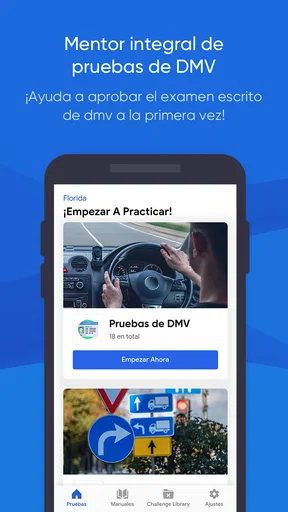
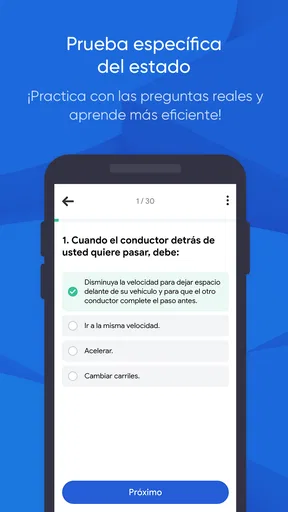
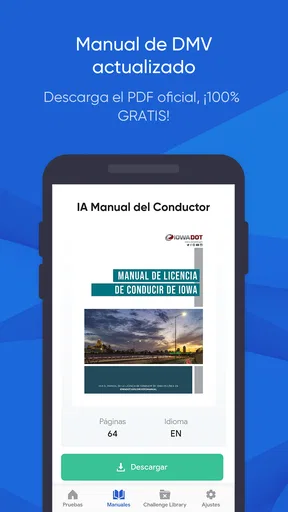
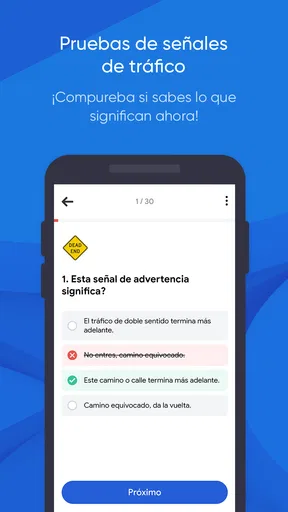
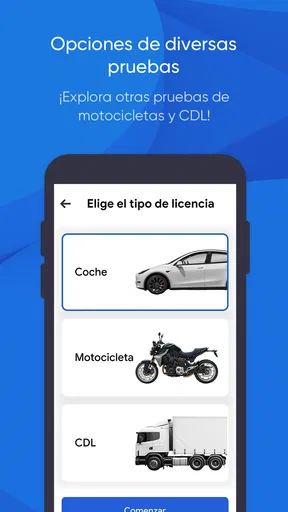
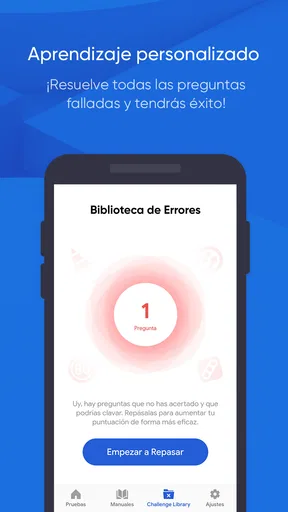
Our Review of DMV Prueba de Práctica 2026
 Analysis by Appyee
Studying for a driving permit can feel strangely difficult when the official handbook is open in front of you but you do not know what to revise first. I tried DMV Prueba de Práctica 2026 as a study companion, and I found its main value in turning spare minutes into focused practice. It is a free Auto & Vehicles app from PPXTech, aimed at people who want to work through DMV-style questions rather than simply read pages of rules.
The app is available to everyone and runs on Android devices using version 7.0 or later. Its current release is 1.4.0, and the app has passed the half-million-install mark. Those figures suggest that it has found a practical audience, while its 4.8 average from more than four hundred ratings indicates that many users appreciate the straightforward approach. I would not treat popularity as proof that it can replace official preparation, but it is a useful reason to examine how it fits into a real study routine.
How I built a useful baseline routine
My first recommendation is not to open the app and answer questions randomly for hours. That feels productive, but it can hide weak areas because a good score may come from recognizing familiar wording rather than understanding the rule. I got more value by treating each session as a small diagnostic: answer a set of questions, notice where I hesitated, and then return to the relevant rule in the official driver handbook.
That workflow matters because practice questions are best used to expose uncertainty. If I selected an answer by guessing between two options, I counted it as a topic to review even when the result was correct. This prevented a common trap with test apps: confusing a lucky answer with reliable knowledge. The app works well for this kind of repetition because it removes the effort of creating questions for myself.
A realistic everyday example is a short session before commuting or while waiting for an appointment. I would complete a few questions, make a mental note of subjects that caused trouble, and stop rather than continue answering carelessly. Later, I could repeat the same process with a clearer goal. The important habit is to connect every practice mistake to a rule, sign, or situation that I can explain in my own words.
I also found it useful to separate recognition from recall. On the first pass, I answered normally. On the next pass, I paused before looking closely at the choices and tried to predict the rule involved. This makes the exercise harder in a productive way. A question that looks easy because one option is familiar may become much less obvious when the choices are read carefully.
The strongest use of this app is repeated diagnosis, not passive reading. It gives me a prompt, asks me to make a decision, and shows where my understanding needs work. That is more active than highlighting a handbook, but it still depends on the handbook for the final authority and explanation.
What to check before relying on a practice session
The app is called a practice test tool, not a complete driving course. Before I started treating a score as meaningful, I checked that I was using the latest available version, which is 1.4.0, and I kept the local licensing requirements in mind. DMV rules can differ by jurisdiction, and a general practice app should not be assumed to match every question, wording choice, or administrative detail used at a particular office.
That is one of the most important limitations. A strong result inside the app does not guarantee success at the real exam. The safest approach is to use the practice questions to identify subjects, then verify those subjects against the official material for the place where you will test. This is especially important for age-related rules, penalties, documents, and local procedures, where small differences can matter.
I would also avoid studying only the questions that feel comfortable. Familiar questions create quick confidence, but unfamiliar wording is closer to the challenge many learners face under test pressure. When an answer seems obvious, I still ask myself why the other choices are wrong. That extra step turns memorization into reasoning and makes repeated sessions less mechanical.
Settings and preparation choices worth checking
There are not many complicated controls that need a long setup, which is part of the appeal. I would still check the device basics before studying: make sure the screen is comfortable to read, keep distractions away, and choose a quiet moment when possible. Since this is a question-focused tool, concentration matters more than elaborate customization.
I also recommend deciding in advance what a session is meant to accomplish. A quick review can be about maintaining familiarity, while a longer session can be used to find weak topics. Without that decision, it is easy to rush through answers simply because the app makes it convenient to continue. The app supports practice; it does not automatically create a personal study plan for you.
Another useful preparation choice is to keep the official handbook available separately. When I missed a question, I did not want to rely on a short explanation or my memory of the answer. I wanted to confirm the underlying rule and understand its exceptions. This two-screen or split-session approach is more effective than using the app in isolation, particularly for learners who are studying in a second language or who find legal wording confusing.
For younger learners or families, the Everyone content rating makes the app approachable, but supervision can still improve the result. A parent or instructor can ask the learner to explain an answer instead of accepting a tap as proof of understanding. That small conversation often reveals whether the learner knows the rule or has merely remembered a pattern.
Faster patterns that improve retention
Experienced users can make practice faster without pretending the app has features it does not advertise. My preferred pattern is the three-pass method. First, I answer at a normal pace. Second, I revisit uncertain answers and explain the rule aloud. Third, I return later and try the same type of question without looking for familiar wording. This creates a repeatable habit while keeping the focus on understanding.
A second pattern is to group mistakes by cause rather than by question. For example, I might notice that several errors came from misreading a condition, confusing two signs, or overlooking who has priority. The exact questions are less important than the repeated misunderstanding. Once I identify the cause, I can review that concept in the handbook and then use the app to check whether the correction holds up.
I also found that slowing down on questions containing words such as “unless,” “except,” or “always” is worthwhile. These small terms can change the meaning of an otherwise familiar sentence. The app is useful here because it gives repeated exposure to the structure of test questions, but the learner has to develop the reading habit personally.
For someone with limited time, I would use short, consistent sessions rather than one exhausting study block. A learner who has fifteen minutes can answer a focused group, mark uncertainty mentally, and review one topic afterward. This is more sustainable than trying to complete a large amount of practice while tired. The free price also makes it easy to keep the app available as a low-pressure revision tool rather than treating every opening as a major test.
Another practical shortcut is to answer without immediately changing an option after a moment of doubt. I noticed that second-guessing can become a habit, especially when two choices look similar. Instead, I first identify the rule that supports my choice. If I cannot state it, I flag the question as uncertain and review it later. This approach gives me a better picture of knowledge than simply chasing a higher score.
Where the app is strong, and where it reaches its limits
The main strength is accessibility. There is no purchase barrier, the purpose is clear, and the app belongs naturally in the Auto & Vehicles category rather than trying to be a broad education platform. For a new learner who wants immediate practice, that simplicity is helpful. PPXTech has kept the basic experience focused on test preparation instead of surrounding it with unrelated content.
The limitation is the same simplicity. A bank of practice questions cannot reproduce the full experience of learning road awareness, interpreting a live situation, or handling the administrative steps around a permit exam. It cannot correct unsafe habits behind the wheel, and it should not be used as a substitute for supervised driving instruction. Someone who needs visual demonstrations, instructor feedback, or a structured course may be better served by combining this app with those resources.
I would also be cautious about assuming that every question is equally relevant to every learner. The correct preparation depends on the jurisdiction and the type of license being pursued. This app can help build familiarity with common DMV-style testing, but the official local handbook remains the reference I would trust for exact requirements. That is not a criticism of the app so much as a boundary that applies to general practice tools.
Compared with reading only a handbook, the app is more engaging and makes it easier to discover weak points. Compared with a paid driving course, it is less comprehensive and less personal. Compared with searching random quiz pages, it offers a more consistent place to practice, although I would still verify important rules through official sources. Its best position is between passive reading and full instruction: a convenient practice layer that makes revision more active.
People who dislike multiple-choice study may find the experience repetitive. That is a fair reason to skip it as a primary tool, especially if you learn better through demonstrations or conversation. I would also not recommend relying on it alone if your test is imminent and you have not read the official material. Fast question repetition can create a false sense of readiness when the underlying rules remain unclear.
How I would use it during the final stretch
Near the exam, I would avoid turning every session into a race. Instead, I would use the app to check whether my weak areas are improving. I would read each question carefully, explain the answer, and review mistakes rather than immediately starting another round. If I repeatedly miss a subject, I would leave the app and study that subject directly before returning.
I would also practice under mild pressure, but not by rushing. Set aside a quiet block, remove interruptions, and answer as though the result matters. Then compare the mistakes with the notes from earlier sessions. The purpose is to see whether errors come from missing knowledge, confusing wording, or distraction. Each cause needs a different fix, and simply doing more questions will not solve all three.
For learners who are nervous, this routine can make the test format feel less unfamiliar. That psychological benefit is real, but it should be kept in perspective. Familiarity with multiple-choice questions can reduce avoidable stress; it cannot replace knowing the rules. I would use the app to build calm repetition while continuing to study the material that explains the answers.
The app’s audience is broad: first-time permit learners, adults refreshing their knowledge, and drivers who want a quick review after time away from testing. Its Everyone rating and free availability make it easy to recommend as a starting point. Still, learners with accessibility needs should judge whether the reading experience suits them and consider another format if they need audio instruction, larger controls, or personal guidance.
My verdict after building a repeatable habit
I came away viewing DMV Prueba de Práctica 2026 as a useful practice companion rather than a complete driving-school replacement. It is at its best when I use it with a clear routine: answer questions, identify uncertainty, verify the rule, and return later to test whether the correction lasted. That workflow produces more value than chasing a perfect session result.
The app has earned a 4.8 average across more than four hundred ratings, and its audience has grown beyond 500K installs. Those signs fit my experience of a focused, approachable tool, although they should not change the need to check local official requirements. The fact that it is free removes an easy barrier for learners who want to start practicing without committing to a paid course.
I would recommend it to a friend who has already found the correct handbook and wants a convenient way to turn reading into active recall. I would not recommend using it as the only preparation, especially for jurisdiction-specific details or anyone who needs instruction beyond multiple-choice questions. Used with that boundary in mind, it offers a sensible daily habit: simple enough to open often, useful enough to expose weak spots, and limited enough that a careful learner will know when to consult a better source.
My final advice is to judge readiness by explanation, not by tapping speed. When you can describe why an answer is correct, recognize the condition that changes it, and confirm the rule in your official material, the app has done its job. That is where this free PPXTech app becomes genuinely valuable: not as the final authority, but as a practical bridge between reading the rules and remembering how to apply them.
Verdict
Strengths of DMV Prueba de Práctica 2026
- Covers common DMV topics such as signs, rules, and safe driving.
- Practice questions help identify weak areas before the real exam.
- Useful for short study sessions while commuting or waiting.
- Simple format makes it accessible for first-time learners.
- Can build confidence through repeated question practice.
Limitations of DMV Prueba de Práctica 2026
- Question accuracy may vary by state and local DMV requirements.
- Some features or practice sets may require an in-app purchase.
- It cannot replace reading the official driver handbook.
- Explanations may be too brief for difficult traffic-law topics.
- Ads could interrupt study sessions in the free version.
Other Releases by PPXTech
View All
DMV Practice Test Pro 2026
Auto & Vehicles4.7
Similar Picks in This Category
View All
Android Auto
Google LLC4.1

maxim — order a taxi & food
PT. SITO4.7

Штрафы ГИБДД: проверка с фото
Pays LLC – Штрафы ГИБДД4.7

Номерограм – проверка авто
Авто Ассист4.8

Дром Авто
Дром4.9

Frequently Asked Questions
What is DMV Prueba de Práctica 2026?
DMV Prueba de Práctica 2026 is a study and preparation app designed to help users review the rules of the road, traffic signs, safe driving practices, and other topics commonly covered in a DMV written knowledge test. It is intended for learners and future drivers who want to practice on a mobile device before taking the official exam.
Does DMV Prueba de Práctica 2026 include official DMV questions?
The app may use questions and topics based on publicly available driver handbook information, but it should not be assumed that every question is taken directly from an official DMV examination. Test content can vary by state, jurisdiction, and license category. For the most accurate and current requirements, users should also study the official DMV handbook and consult their local DMV website.
Which states or license types does the app support?
Support can depend on the version of DMV Prueba de Práctica 2026 and the region selected inside the app. Some practice apps focus on standard car permits, while others may include motorcycle, commercial, or multiple state-specific tests. Before downloading, check the app description and available settings to confirm that your state and intended license type are covered.
Can I use DMV Prueba de Práctica 2026 without an internet connection?
Many practice-test features may remain available after the required content has been downloaded, but offline access can differ depending on the app version, device, and specific section being used. Advertising, updates, account features, or additional question packs may require an internet connection. It is a good idea to open the app once online and verify which tests work offline.
Is DMV Prueba de Práctica 2026 enough to pass the written driving test?
The app can be a useful revision tool, especially for identifying weak areas and becoming familiar with multiple-choice questions, but it cannot guarantee a passing result. Users should combine practice sessions with careful study of the current official driver handbook, road signs, penalties, and local laws. Reviewing mistakes instead of only memorizing answers will provide better preparation.
